The Shift in Online Retail
Everyone is talking about artificial intelligence in online retail right now. Every time you open LinkedIn or read an industry newsletter, someone is trying to sell you a new artificial intelligence tool. I am absolutely not telling my clients to stop investing in other AI tools, because many of those paid software platforms offer incredible value for inventory management, email marketing, and backend operations. But for most store owners, adding conversational artificial intelligence to the front end of their business usually means paying hefty monthly software subscriptions or hiring developers to build custom chatbots for their website. It can feel overwhelming and expensive to keep up with the trends.
I am telling all my ecommerce clients to hold off on buying expensive third party chat tools right now because Google just released an incredible new feature. It is called the Google Business Agent, and it allows online stores to leverage enterprise grade AI for absolutely free.
I am so excited to bring this to every single brand I work with because it gives you a huge competitive advantage without increasing your marketing budget by a single penny. The Google Business Agent takes your existing product data and creates a twenty four seven virtual sales associate that lives right inside the Google search results. You do not have to pay for extra clicks, and you do not need to learn how to code. It simply enhances the Shopping presence you already have built.
How Customer Behavior is Changing
To understand why this is such a massive breakthrough for online stores, we have to look closely at how customer behavior is fundamentally changing. People are no longer typing short, basic keywords into their search bars on their phones. A few years ago, a customer might have searched for a broad term like buy running shoes and clicked on the first picture they saw on the screen. Today, that same customer is typing a complete, highly detailed sentence. They are asking Google what the best running shoes are for someone with flat feet who runs ten miles a week on concrete, and they want to know if that specific brand runs true to size. They expect the search engine to understand the nuance of their personal situation.
Standard Google Shopping ads simply cannot answer a prompt that complex. All a standard ad can do is show a small picture, a product title, and a price tag. If a shopper has a highly specific question about materials or sizing or compatibility, they have to click your ad, wait for your mobile site to load, hunt for an FAQ page, and hope the answer is easy to spot among all the text. If they cannot find the answer within a few seconds, they leave out of frustration. They bounce right back to the search results to find a competitor who makes things easier to understand or a blog post that explains it clearly. That friction is the number one reason ecommerce stores lose sales. We spend all this time and money getting them to click, only to lose them because they could not find a simple detail.
Meet the Google Business Agent
The Google Business Agent completely eliminates that friction.
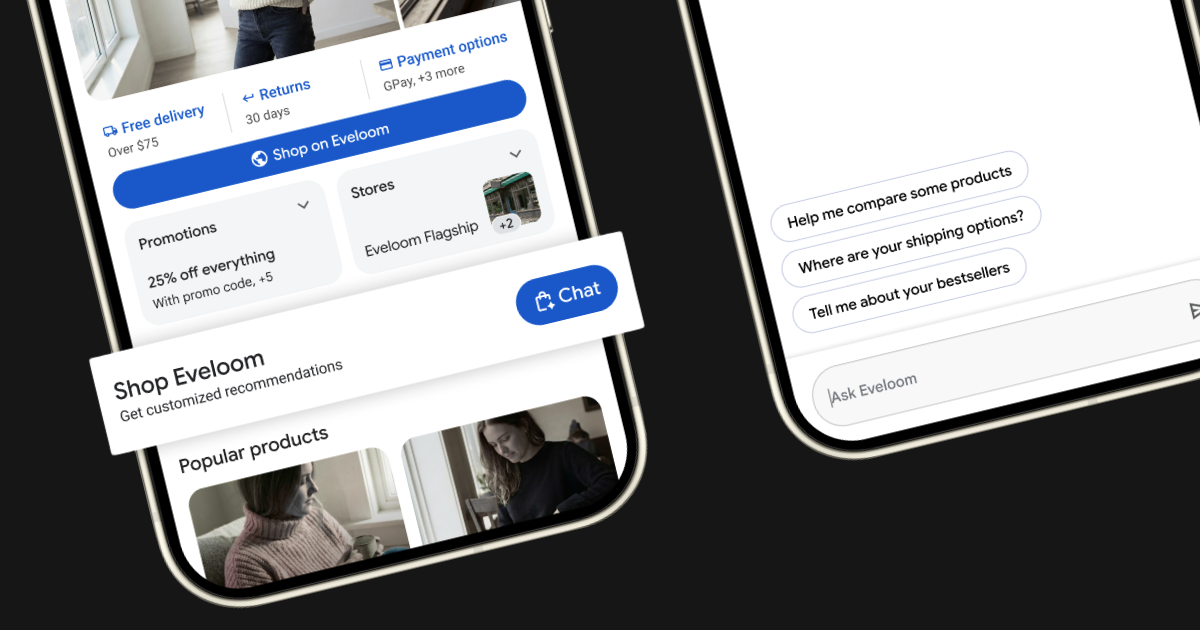
When shoppers have complex questions about your products, they no longer have to click through to your website and hunt through pages of text. Instead, a chat button appears directly on your Google Shopping listings. If a customer is looking at your brand profile on the search results page, they can click that button and immediately start talking to the AI right there on the screen.
The agent acts like a highly trained boutique sales associate. It guides the user through their hesitation, answers their specific questions, and recommends the exact product variant they need. It seamlessly bridges the gap between deep research and the final checkout without making the user jump through hoops.
Stopping Pre Purchase Abandonment
The benefits of turning this feature on are absolutely massive for independent brands who want to scale.
The biggest and most immediate win is stopping pre purchase abandonment. Buying hesitation is a psychological hurdle every retailer has to overcome. If someone is not sure a car part will fit their specific vehicle model, they simply will not buy it. If a shopper is worried a new skincare serum might irritate their sensitive skin, they will abandon their shopping cart. By giving them an instant, accurate answer before they even leave the Google search page, you capture their buying intent at its absolute peak. You resolve their hesitation in real time while their credit card is right there in their hand.
Imagine a customer is redecorating their living room and they find one of your sofas in the search results. They love the look of it, but they have a dog and need to know if the fabric is scratch resistant and easy to clean. Normally, they would have to dig through your product description or read dozens of reviews to find out. With the Business Agent, they just ask the chat window. The AI instantly replies that the sofa is made of a performance velvet that is highly durable and pet friendly, and it even offers to show them a guide on how to spot clean it. The customer gets total peace of mind instantly, making them incredibly likely to click through and complete the expensive purchase right then and there.

Image courtesy of Google
Dominating the Research Phase
Another major benefit is your ability to completely dominate the research phase of a customer journey. Traditional paid search ads are great for people who already know exactly what they want to buy. But a huge portion of the market is full of people who need guidance. They are looking for an expert to tell them what to purchase. The Business Agent allows you to be that expert. You get to position your brand as a helpful guide right at the beginning of their journey. If you are the brand that takes the time to answer their complicated questions, you are the brand they are going to trust, and ultimately, you are the brand they are going to buy from.
There is also an incredible hidden benefit for store owners when it comes to customer data. When shoppers talk to your virtual agent, Google allows you to see the conversational logs. You actually get a front row seat to the exact objections, comparisons, and questions real buyers have about your catalog. If thirty percent of your shoppers are asking the AI if your jackets run small or if your coffee is fair trade, you now have the exact data you need to update your product pages. You know exactly what to mention in your next email newsletter or video ad campaign. You are no longer guessing what your customers care about because they are telling the AI directly every single day. You can take those insights and share them with your email marketing team or your organic social media manager to create better content across the board.
How the AI Works Behind the Scenes
You might be wondering how this actually works from a technical standpoint. A common concern I hear from business owners is that the AI might make wild guesses about their products or hallucinate facts that simply are not true, which could lead to angry customers or returns. You do not have to worry about that because the system does not scrape the random internet to find answers.
The agent uses the precise data you already have sitting securely inside your Google Merchant Center account. It syncs directly with your product feed. Because it is strictly connected to your feed, it always knows your current pricing and inventory levels. If an item goes out of stock on your website, the agent instantly knows about it and will completely stop recommending it in the chat interface. It will never try to sell something you do not actually have in your warehouse or promise a discount that is no longer active.
The real secret to making the AI incredibly smart involves something called conversational attributes. These are the tiny, granular details that are usually buried deep in your website descriptions. We are talking about materials, compatibility standards, exact dimensions, care instructions, and sensory details like tasting notes for coffee or fragrance profiles for perfume. We feed all of that rich data into the Google system so the AI has a massive knowledge base to pull from. If you sell hardware, we load the feed with decibel ratings and voltage requirements. If you sell apparel, we load it with inseam lengths and fabric blends.
You also get to train the agent on your specific brand voice. You are completely in control of how the AI talks to your customers. If you run a rugged outdoor camping brand, you can tell the AI to use a professional, outdoorsy tone that prioritizes safety and durability. If you run a luxury cosmetics brand, you can tell the AI to sound like a high end beauty concierge. You upload your real shipping policies, your return windows, and a comprehensive list of your top customer service questions. This ensures the agent always gives accurate, brand safe answers that match your company values perfectly.
Getting Your Store Ready
Getting this system up and running requires a bit of strategic prep work. This is exactly what I have been walking my ecommerce clients through this month to make sure they are ahead of their competitors.
The process always starts with a comprehensive feed audit. You cannot just turn the AI on and expect it to work miracles if your product feed is empty or poorly formatted. The biggest mistake brands make is only filling out the bare minimum required fields in Merchant Center like the title and price. We have to make sure every single optional attribute is filled out perfectly. The AI needs all those technical details to be helpful to the customer.
We also spend time enriching the actual product descriptions. We rewrite them to talk about who the product is for and what specific problems it solves, rather than just listing basic bullet points. We want the AI to understand the lifestyle benefits of the product. The more context we give the system, the better it can sell on your behalf.
Once the data is completely solid and optimized, we go into the Merchant Center dashboard and define the brand persona. We upload your policies and your frequently asked questions. Google is very smart about this rollout and gives merchants a private sandbox environment to test the chat before making it live to the public. We use this sandbox extensively. We ask the AI incredibly hard, obscure questions about your products to make sure it responds perfectly. We test edge cases, like asking it to compare two very similar items, or asking it about shipping times during a holiday rush. We tweak the settings and refine the data until it acts exactly like your best customer service employee. Once we are totally happy with the performance, we flip the switch and take it live.
The Future of Conversational Commerce
Shoppers today want immediate answers, and they have very little patience for clunky websites or confusing product pages. The brands that step up and provide those answers directly in the search results are going to win the next era of ecommerce. You have the amazing opportunity to offer your customers a personalized shopping concierge that removes their buying hesitation. You get all the conversion benefits of a custom trained AI assistant while taking advantage of enterprise technology that Google provides at zero extra cost.
The conversation is already happening on the search results page. Your potential customers are asking questions right now. The only question is whether your brand will be the one answering them. I highly recommend taking a close look at your Merchant Center feed today so you can start preparing your store for the future of conversational commerce. This is an exciting leap forward for independent brands, and I am ready to help you implement it.